
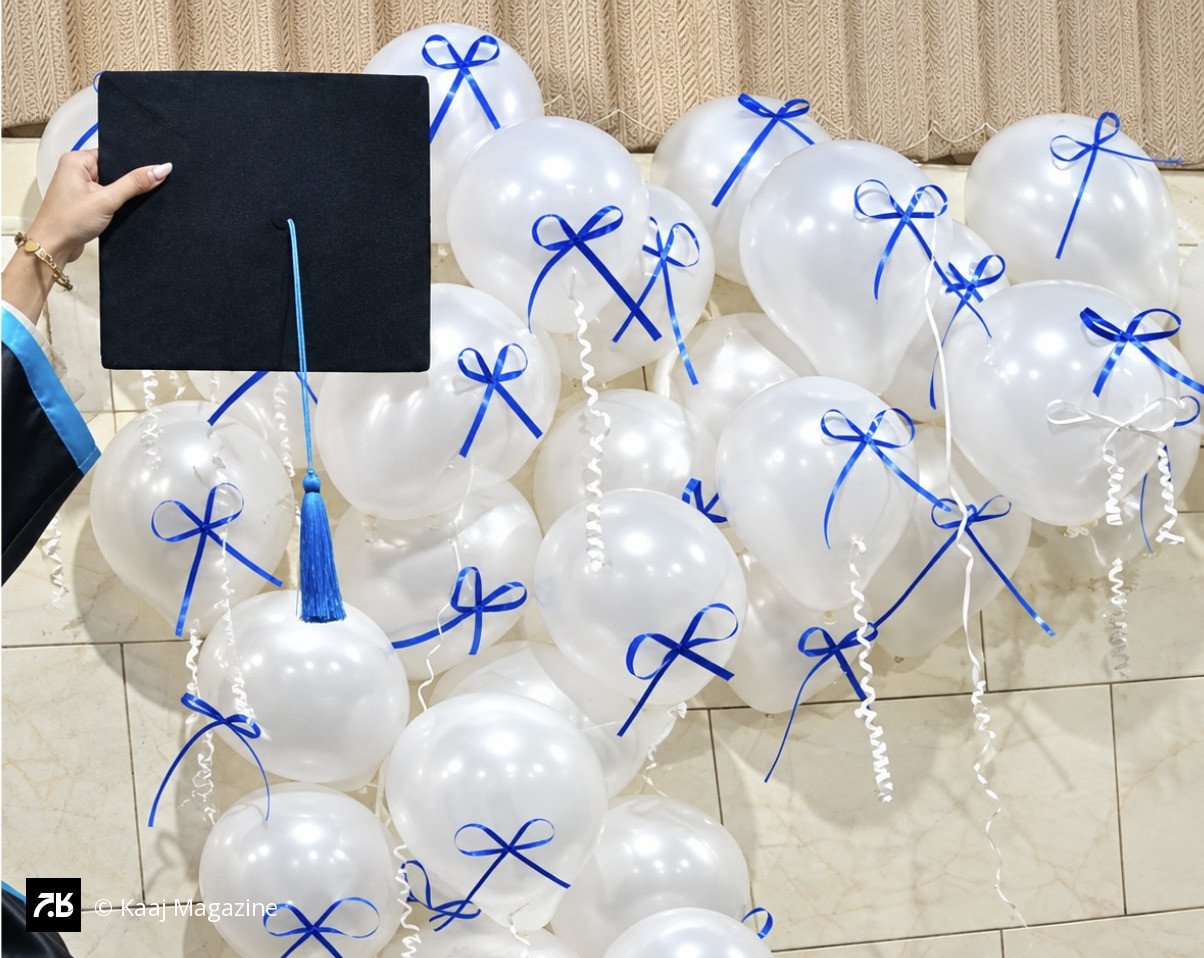
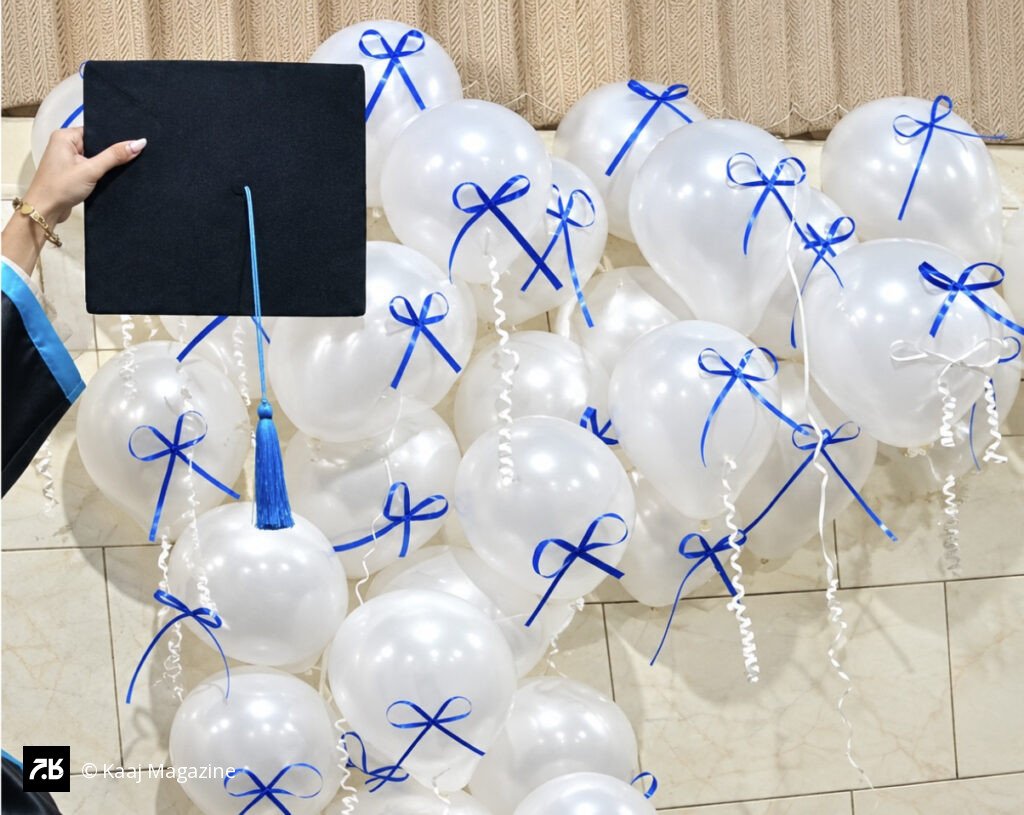
A graduation cap made of paper, but the fruit of years of struggle. After two years of secret study, Husna finally reached her dream of graduating.
By Hajera Sadat
Husna pulled back the gray curtain on the small dormitory window and watched the noisy children playing outside. Then she looked up at the sky. The birds flying freely across the blue sky stirred a longing for freedom in her heart. She had come to Kabul to continue her medical education. After the Taliban banned girls’ education, she had to pursue it secretly, in the basement of a house.
Husna (a pseudonym) is in her twenties and comes from a district in eastern Afghanistan. She once dreamed of becoming a journalist, but the country’s circumstances changed the course of her life and eventually led her to medical training.
When the Taliban swept back into power in August 2021, they moved within weeks to bar girls from secondary school, allowing them to study only through the sixth grade. In December 2022, they extended the ban to universities, making Afghanistan the only country in the world that forbids women and girls from learning beyond the primary level. The decrees did not only close classrooms. For young women like Husna, already enrolled and set on a profession, they turned the simple act of studying into something that had to be hidden.
“When I passed the Kankor (national university entrance exam) and was admitted to [university] to study journalism, no one agreed with my going,” she said. “Through pleading and begging, I managed to persuade my older brother, and then the rest of my family.”
Despite her family’s opposition, Husna set off for university and moved into the university’s girls’ dormitory. Local residents reacted to the decision in different ways. She says some people in her village made negative remarks about her.
But Husna’s studies did not go the way she had hoped. She finished her final exams for the semester and started home. While she was on her way, the Taliban announced the decree banning girls from studying at universities.
Husna remembers that day: “After the last exam, on December 20, 2022, I went back to the dormitory, collected a few of my things, and set off with my brother for our province. Before I even reached home, I opened WhatsApp. The dean of the faculty had posted an announcement in the group telling us not to return to the university until further notice. That night was like Judgment Day for me.”
She smoothed the folds of her white chapan (a long traditional robe) with her fingers. The grief of that day was still visible on her face. She paused for a moment, then said: “But I kept going anyway.”
Learning Underground
From 2022 to 2024, Husna was under severe psychological strain. She says doctors prescribed her antidepressants several times. Still, she did not give up hope of continuing her education. Eventually a family member applied on her behalf for a job at a health facility in her home province, and that opportunity opened a new path for her.
“They gave me an exam and told me I had passed,” Husna says. “But before I could start work, I had to study in secret in Kabul for two years. The clinic itself had arranged this.”
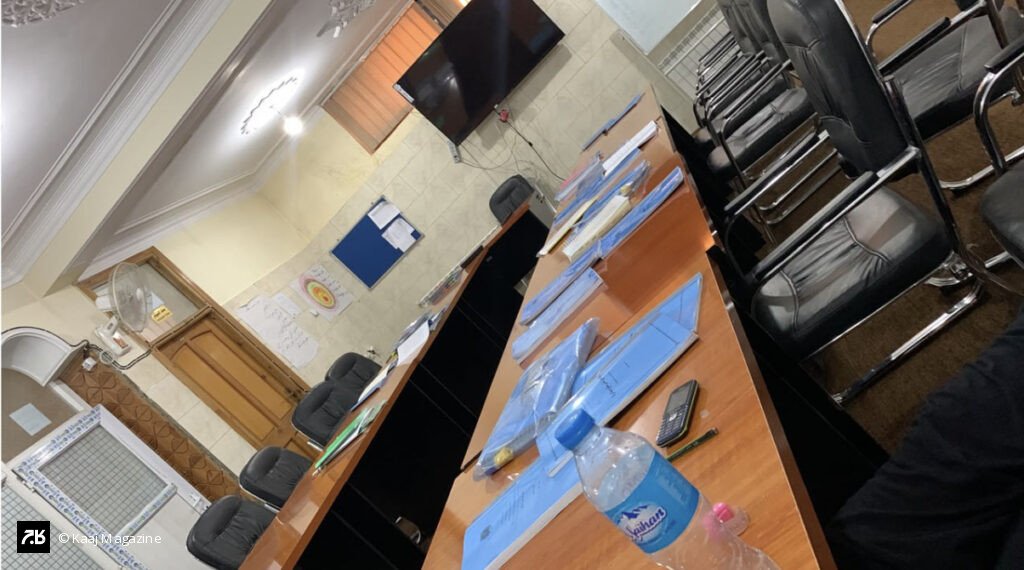
The training took place in the basement of a house. It had four rooms, and about twenty girls from several provinces in south and eastern Afghanistan lived and studied there.
Husna described the conditions. “We studied and lived in the same place. There was no sign on the door, and the courtyard gate was always locked. Staff brought our food in from outside. All of our teachers were women. We weren’t allowed to open even the small windows of the rooms,” she said.
For these girls, the basement was both their classroom and their home. Its locked doors and small windows marked the boundary between their dream of education and their fear that their secret would be discovered. They wanted to study, learn skills, and one day use their knowledge to serve their people. To reach that goal, they had to give up their most basic freedoms.
“For months we weren’t allowed to take a single step outside the dormitory,” Husna said. “We could go home only once every six months, and only if our mahram (male guardian) came to take us. Some days we were very sick, but for fear of arrest, the people in charge wouldn’t let us even go to a pharmacy nearby.”
She fell silent for a moment, looked at the table in front of her, and took a sip of water. Then she talked about the price she paid to keep studying.
“Our crime was studying. I accepted this prison for the sake of my education. At night we were very afraid. When I felt homesick, I would look at the sky from a corner of the courtyard. But every time I thought of the shortage of women doctors in my province and the hardships people there face, I told myself I had to keep trying.”
Over time, the risk of discovery grew. Husna says that at one point the Taliban became suspicious of the site. Members of the Vice and Virtue enforcers patrolled the street where the house stood three times within twenty-four hours.
To stay hidden, the girls wore masks and full hijab even in class and among themselves. Even so, they did not feel safe.
“Just because we were studying, we were treated as criminals. I don’t know how the Taliban found out about our location. Suddenly we were told we had to leave the dormitory as soon as possible. They had informed the families of all the girls as well. The girls and the teachers were all crying with us. I felt I hadn’t reached any of my goals,” she said.
For Husna, the news brought back the day her university studies were cut short. Then, after years of effort and hardship, it seemed she had lost her second chance as well. Heartbroken, she returned home with her brother.
The Last Step and the Last Hope
Husna spent a week at home, waiting and uncertain, until she received a WhatsApp message. It said the final semester would continue online and that graduation certificates would be issued at the end.
The final semester was shortened, and the organizers decided to hold the final exams in person.
The program’s organizers assured the students’ families that their daughters would be kept safe. Families were asked to send their daughters, accompanied by a mahram, to another secret location in Kabul for several weeks to take the final exams.
But returning to Kabul did not mean the end of fear. Once again, the girls spent their days in hiding and anxiety.
“Those weeks were torment,” Husna said. “Every moment we were afraid of being arrested.”
She says the students had nine subjects. In the first week they took the midterm exams, worth 20 percent of the grade. The second week was set aside for lessons, and the final exams took place in the last week, in July 2026.
After months of secret study, fear of arrest and separation from her family, the night finally came when Husna knew she would graduate the next day.
“I can’t put what I felt in that moment into words,” she said.
As Husna told her story to Kaaj, her voice trembled and tears filled her eyes. It was as if remembering that night, after everything she had endured, still carried her back to that moment, when the dream of graduating no longer seemed out of reach.
Husna and her classmates wanted to buy flowers and supplies for a graduation ceremony to celebrate their achievement. After two years of confinement, they were allowed, this time, to leave their residence to go shopping.
“In two years, this was the first time the people in charge let us go out,” Husna said. “It took a lot of pleading, and they gave us only one hour to shop. We went to a bazaar. We bought flowers, black graduation gowns and a cake, but because we had so little time, we couldn’t get graduation caps. After that they wouldn’t let us go out again to buy caps.”
The women made caps from paper so that they could celebrate the end of a difficult course of study, even in that confined space and far from their families.
Husna said she was too happy to sleep. For her, the certificate she earned after so much hardship was worth the whole world. Still, no family members or guests were allowed to attend the ceremony.
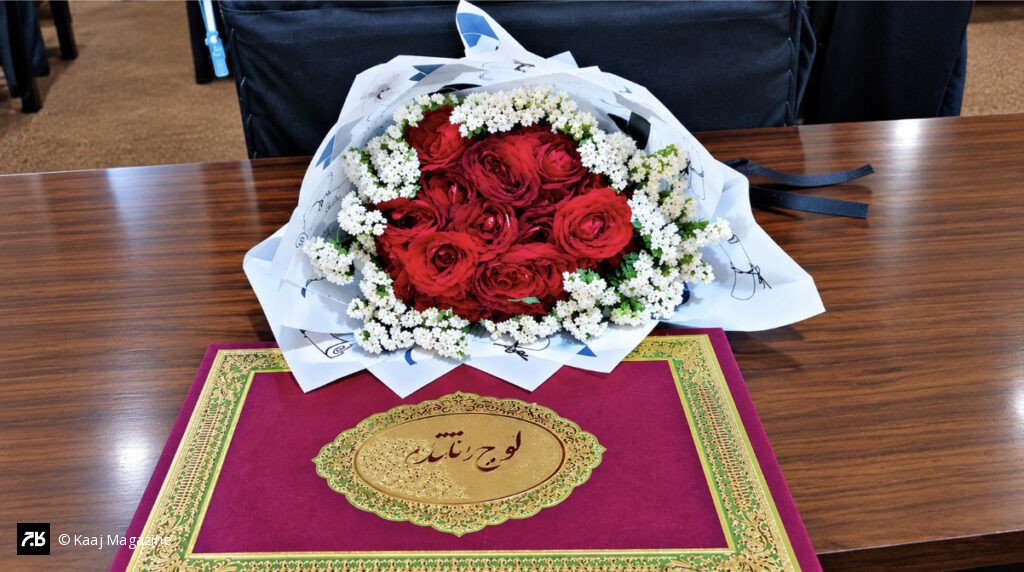
She remembered the moment she received it. “Finally the time came. I put on the black graduation gown, placed the paper cap on my head, and received my certificate in front of the classroom stage. That feeling is completely different. I went back to the village with my brother, not empty-handed. Despite all the restrictions, people there had gossiped about me and called me a bad girl. That day, my certificate and the gown I wore answered all of those accusations.”
For Husna, this homecoming was more than the end of a course of study. She was returning to her birthplace with an achievement she had fought for years to reach, against deprivation, fear and social judgment.
The Sweet Taste of Success
Husna now works in health care in her home province. She says she is happy to be able to serve her people.
But health services in her province remain worrying, especially for women. Husna says there are very few women specialist doctors anywhere in the province and access to women specialist doctors across the province is very limited.
Husna says that sometimes, even when a woman comes with a mahram, her registration slip or appointment is issued in the name of her son, brother or husband rather than in her own name. Women sometimes have to choose between enduring their pain at home and traveling to another province for examination and treatment.
“Women here face very serious problems,” Husna said. “The few male specialist doctors also face all kinds of restrictions. There is no specialist in obstetrics and gynecology, and only one male doctor works in that department at the provincial center. In the examination section, a curtain is hung across the middle of the room. On one side are the female nurse, the machine and the patient. On the other side, the male doctor reads the patient’s results on a screen.”
She says even these limited services exist mainly in the provincial capital, and women in rural areas have no access to them. Patients who need an ultrasound to diagnose appendicitis or certain other conditions are also sent to other provinces.
For Husna, graduation is not the end of the road. It is the beginning of a path she fought for years to reach. She hopes a day will come when no girl or woman has to hide in order to study, and all of Afghanistan’s girls and women can learn freely and use their knowledge to serve their people. Still, many women like Husna are waiting for a chance to make their dreams come true.
Editor’s note: For her safety, Kaaj has changed Husna’s name and withheld details that could identify her.