
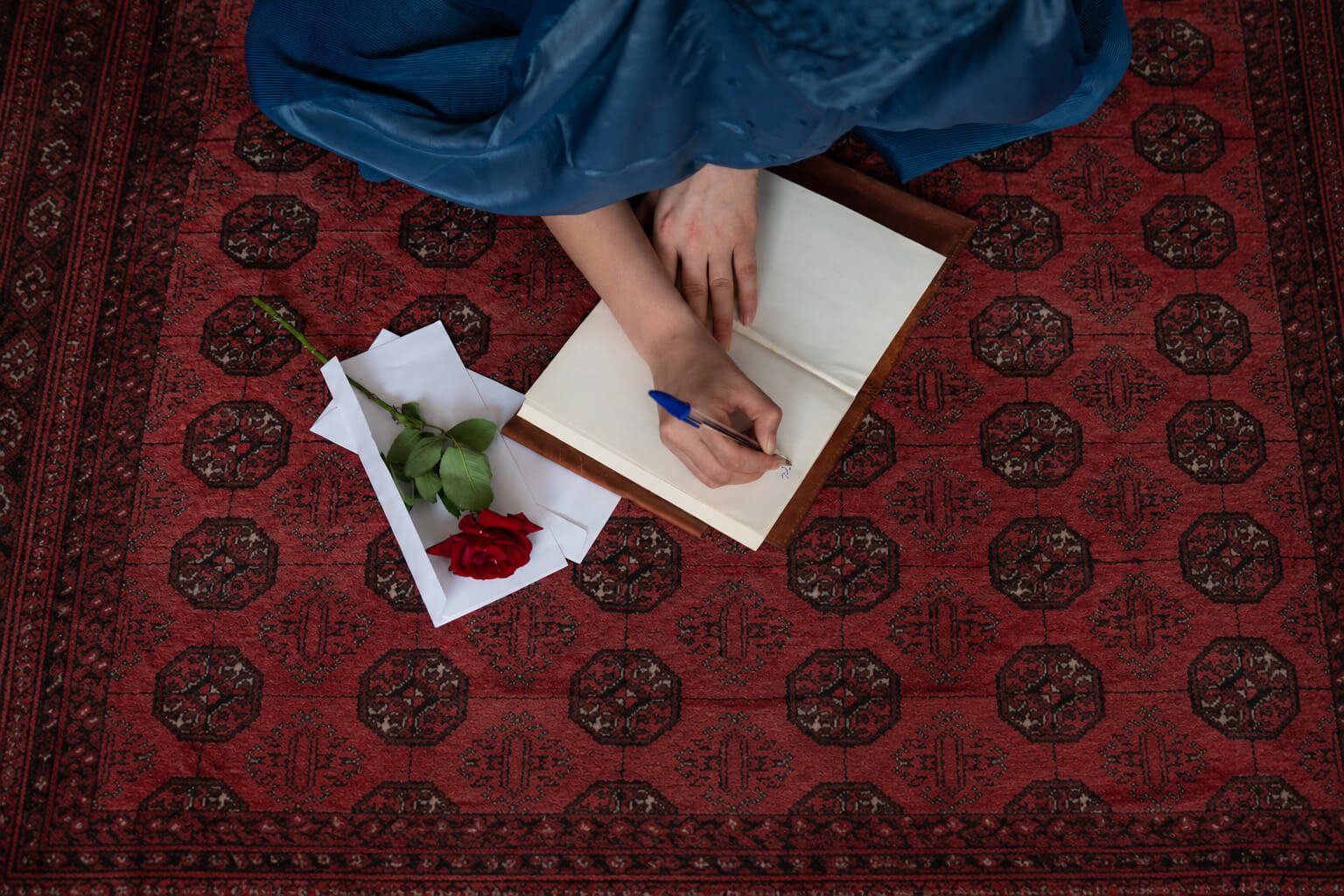
I am sitting in a small room in Kandahar, the seat of the Taliban’s supreme leader, beside a window that opens onto a dirt alley. The evening light, soft and faint, passes through the thin curtain and settles on the white page of my notebook. I hold a blue pen, and for a moment I am caught between writing and not writing. Outside, the distant call to prayer mingles with the noise of children, but inside me a heavy silence has settled. I don’t know how to fit these lifeless days into a few pages, days in which memories of the past and the worries of today have become tangled together. Still hesitating, I begin to write: a letter from Kandahar.
Even now, if I close my eyes, I can see the Kandahar of the past: alleys that smelled of rain-soaked earth, markets full of noise and bustle, and gardens where red pomegranates glistened in the sun. A city where, despite all its hardships and insecurity, one could still speak of life, progress and the future. In those days, too, assassinations, threats and fear were part of people’s lives, and there was never complete peace, but there were still openings for hope. One could study, work, plan for tomorrow, and believe that perhaps life would one day get better.
But today, more than five years have passed since the Taliban seized Kandahar. In these years, it is not only the city that has changed; the way we see life, the future and our dreams has been transformed too. Sometimes I feel that time keeps passing, but life has stopped at the very point where so many roads were closed to us.
It would be wrong to say that everything in the city has stopped: roads are being built, buildings are changing, and life goes on in its own way. But amid these changes, one question remains unanswered: What does progress mean when so many girls cannot decide their own futures?
The Beginning of a Nightmare for Women
I still clearly remember the first days of the Taliban takeover. When we heard they were approaching Kandahar, we went to Kunar. We waited there for a few days to learn what would become of our lives. In the end, what we feared happened, and Kandahar fell to the Taliban. For several days we could not return home. When we finally decided to go back to the city, fear traveled with us, a fear that came not only from what we had seen but from what might be waiting for us.
On the way back, they stopped our car. They pulled our younger brother, our only mahram (male guardian), out of the car and questioned him about us. Several of us sisters sat in the back seat, gripping each other’s hands and trembling with fear. We remembered the rumors that the Taliban were taking girls away and forcing them into marriage. We didn’t know what would happen, or whether we would ever make it home. In the end they let us go, but that moment did not end when the car moved on; the fear of that day is still alive in me.
After that, everything changed quickly, even the attitudes, behaviors and decisions we had once believed would never change. I grew up in a family where forced marriage was never even spoken of, yet in those very first days my father found himself wishing we had already been married, so that the burden of responsibility for us would weigh less heavily on his shoulders. That was when I understood how fear can change even a person’s deepest beliefs.
For me, the nightmare is not over. In Kandahar, being a woman has taken on a new meaning of suffering and hardship. The restrictions are not limited to education and work; movement, clothing and even the simplest daily tasks are shaped by these harsh conditions. Girls and women face obstacles in many of their personal and social decisions, and sometimes doing something that once seemed ordinary becomes a real struggle.
Forbidden Dreams
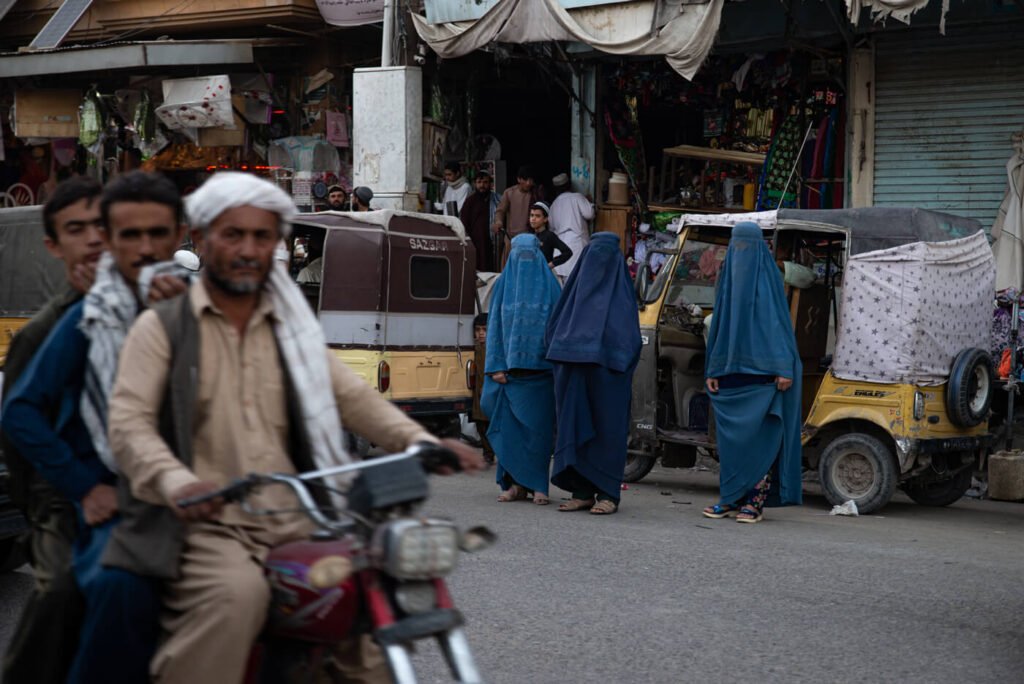
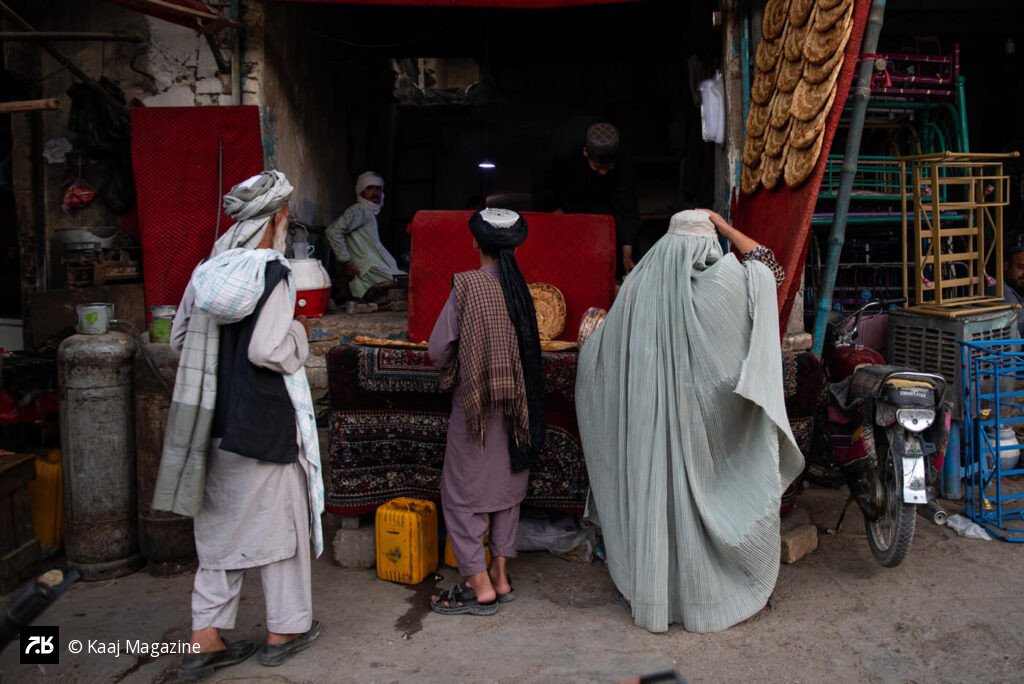
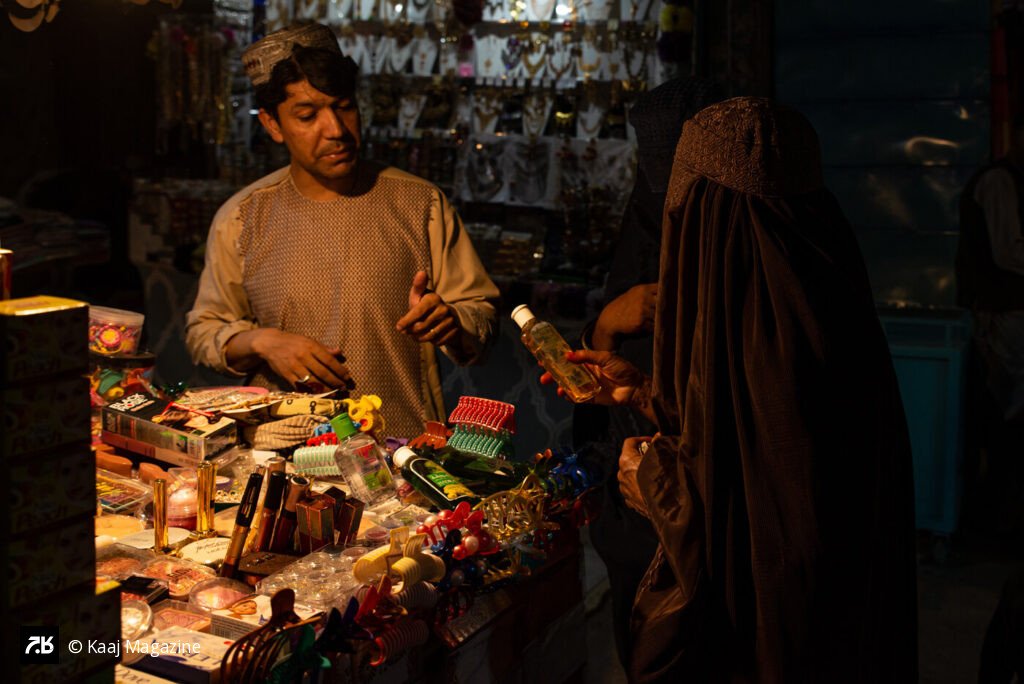
In Kandahar, the chains of dress restrictions have tightened around women’s hands and feet. I remember that in the past many women wore the chadari (the full-body burqa), but today, in my experience and observation, the black hijab and the niqab dominate public spaces, and women face serious restrictions on showing their faces. We are forced to hide behind blackness: black hijabs, black burqas, and dull, faded khaki chadaris. It is as if the colors have slowly been stolen from our lives and darkness has taken their place. In the alleys, women walk like shadows: faceless, colorless and often silent.
Girls are not allowed to leave home without a mahram. Every family must obtain a “mahram card”: a piece of paper with the photo and name of a father, brother or husband. For men, this document may be a sign of power and authority over women, but for us girls it is proof of a prison, a prison whose walls are built not of stone but of the unwritten laws of hatred.
Sometimes I ask myself: Is this the same city where girls once moved about more freely and could even go out alone at night? How could life change so much in just a few years, so that things that were once part of ordinary life have become distant dreams?
In Kandahar, the presence of senior Taliban officials and the severity people experience in this province have shaped the atmosphere of daily life. Of course, the pressures of these years have not affected women alone. Men too have faced economic hardship, job loss and social restrictions. Many who were government employees during the Republic have lost their positions and turned to street vending, shopkeeping or other work to provide for their families. On top of the economic pressure, men’s appearance and behavior have also been subjected to strict standards. Even so, for women, the paths to education, work and an independent presence in society have become far narrower.
Lost to the Wind
Like many women, I had dreams too. I wanted to work, to be useful, and to do something for women who were suffering. For a while I worked at a charity. My colleagues and I tried to help women living in difficult circumstances, and we wanted to create the conditions for them to find their place in society again. I believed that work was not only a way to meet life’s needs; it was a way to have independence, to feel useful and to take part in building the future.
But I lost my job too. The day I found myself sitting in a corner of the house, with my dreams still alive in my mind and opportunities slipping away one after another, I finally understood how heavy deprivation really is. We had wanted to do something for women struggling with hardship, but in the end we ourselves joined the ranks of those blocked from carrying on with their lives and reaching their dreams.
Sometimes I think about the women who studied for years, gained experience and worked hard to build their lives. Each of them has a story, and a dream that once may have seemed within reach. It is painful to see in yourself the ability to do something and have no chance to use it. Deprivation is not only the loss of an opportunity; sometimes it also wears away a person’s belief in her own abilities. When you face closed doors again and again, you can’t help asking yourself whether you can still reach the place you once worked so hard toward.
One of my greatest dreams was to continue my education and earn a master’s degree. Even now I sometimes wonder where I would be in my life today if I had been able to keep studying. Perhaps I would be busy learning new subjects and planning my future, and instead of worrying about closed roads, I would be thinking about which path to choose. I don’t know what my life would look like, but I know the desire to learn is still alive in me. That longing has not faded with time; only the chance to pursue it has been taken from me.
Sometimes I think a goal only becomes truly meaningful when there is a way to reach it. We can dream, imagine better days and make plans for the future, but when a vast gap opens between what we want and what we are allowed to do, hope itself comes under strain. I don’t know what Kandahar’s future holds, or when the girls of this city will once again be able to make decisions about their lives with peace of mind. Sometimes even thinking about the future becomes exhausting, not because we no longer want anything, but because we don’t know when we will ever get the chance to take a step toward what we want.
In Search of Meaning
On days like these, when longing and the weight of this reality press on my soul, I take refuge in reciting poetry, painting and reading. They help me step away from the monotony of daily life for a few moments and express what is happening inside me in another form. But the truth is that none of them can take the place of great dreams.
Some mornings when I wake up, I don’t know why I should keep going. The days have all become alike: the same worries, limited opportunities, and a future that is still unclear. Life wasn’t easy before either, but at least I could strive for what I wanted. Now, more than anything, I miss that simple possibility of choice: the day when I can decide what to study, where to work and how to build my future.
Even so, I don’t want to give up on my dreams. I still want to study, earn a master’s degree, work, and one day reach a place I can only imagine today. I still believe that life should not be reduced to today’s restrictions, and that the girls of this city deserve to use their abilities and decide their own futures. Perhaps I can’t know when that day will come, but the lack of opportunity has not destroyed my passion.
I write from Kandahar: from a city whose roads may be rebuilt and whose face may change, but where the road for so many of its girls toward education, work and freely choosing their future remains closed. I write from a city where, despite the restrictions, women still dream.
I can’t write any more than this. Not because there is nothing left to say, but because sometimes words cannot carry this much pain. I still wish that one day someone would wake me from this nightmare and tell me that all these years were only a bitter dream.
If that day comes, I will write again: about women, about girls, about dreams that have survived despite every restriction, and about a city that still lives in a corner of my memory with all its old beauty. I will write about a Kandahar whose alleys smell of rain-soaked earth, whose gardens bear red pomegranates, and where life no longer breathes under the shadow of fear and prohibition.