
FEATURE
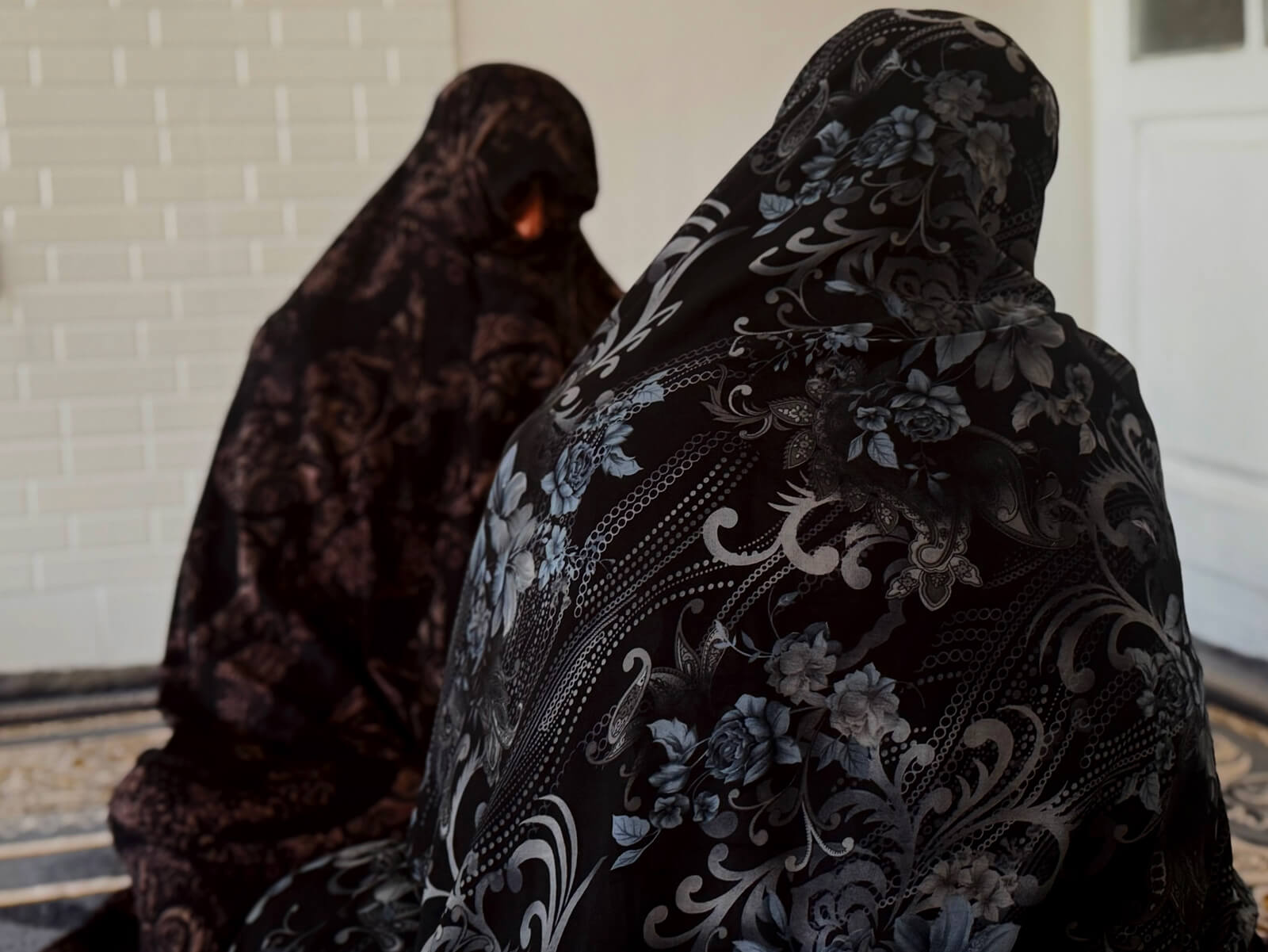
A wave of detentions targeting women in Herat, in western Afghanistan, has emptied streets of women, spread fear into their homes, and sparked rare public protests, joined by men.
Reported by Kaaj Magazine journalists in Afghanistan
Nearly a month after Taliban authorities began rounding up women across Herat, the city’s streets remain emptied of them. Women have all but vanished from markets, classrooms and public squares. Families are keeping daughters home. And for the more than 60 women local sources say have been detained since June 6, release has not meant safety: Taliban authorities are still surveilling them, residents report new arrests by the day, and officials in Herat deny that any of it is happening.
It began for Sharmila on the morning of June 6, the first day of the operation. When she resisted, a Taliban officer slapped her across the face. Moments later, she says, several men forced her into a vehicle and drove her away.
“It was the worst day of my life,” she says. “Even now, when I think about those hours, every cell in my body trembles.”
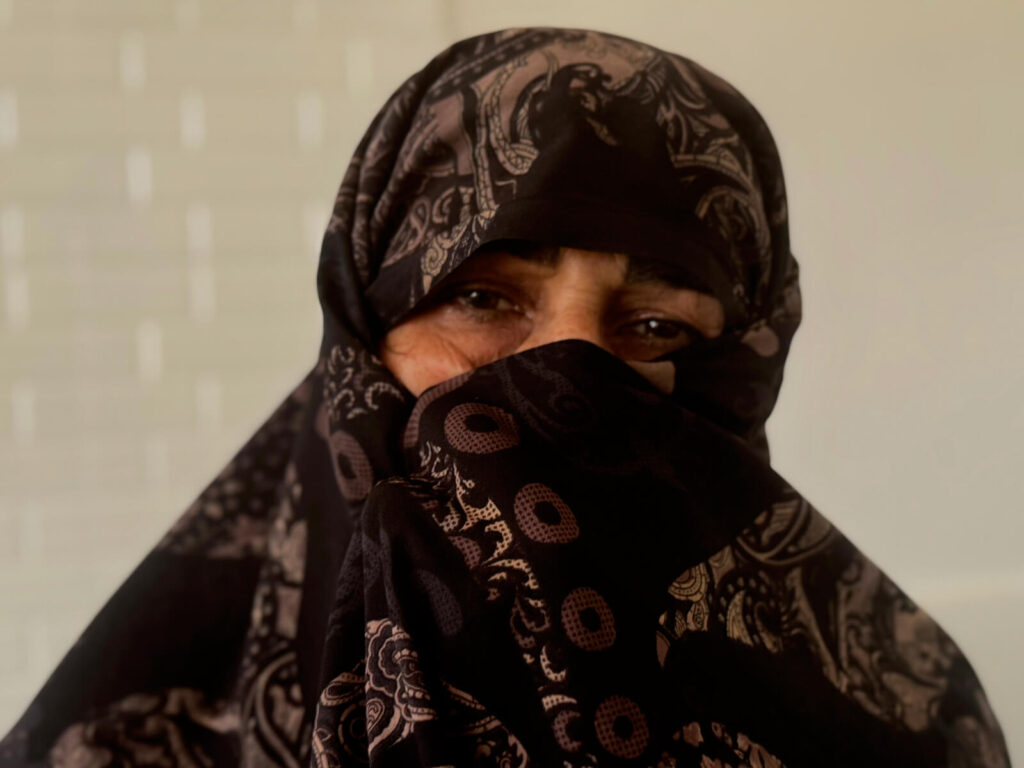
Sharmila is not her real name. Kaaj has changed her identity for security reasons because Taliban authorities are continuing to surveil the women after they were released from detention. She is one of more than 60 women who local sources say were detained during the sweeping campaign of arrests. About 20 women were taken during the first hours of the operation.
Today, she says, the fear remains, and most women no longer leave their homes for fear of being detained.
“The city has become empty of women. Fear is no longer only in the streets. It has entered our homes.”
Women were reportedly taken from several parts of the city, including Lailami Road, Nokhodrizan and the 65-Meter Road area. Local sources said a pregnant woman was among those detained.
For Sharmila, the arrest began in the middle of a regular day.
“I was wearing a manteau, and I was detained because of it,” she says. “When they detained me around 11 a.m., there were already many women there. I remained in detention until 10 p.m.”
Like many women in Herat, she was wearing a manteau, a long coat commonly worn by women across the city. This is a custom in Herat, where most women do not wear the burqa, the all-encompassing blue garment that covers the face and eyes with a mesh fabric. The manteau leaves the face visible, which is permitted for women under Islamic law. Taliban authorities have linked many of the arrests to what they describe as violations of their dress code requirements.
Inside the detention facility, she says, Taliban officers searched the detained women’s phones.
“They checked my phone without my consent. They looked through my private photos. Not only mine, they did the same thing to other women as well.”
But it is the slap she remembers most clearly.
“I will never forget that slap. He hit me so hard that my face still hurts.”
A City Growing Quiet
The arrests quickly changed the atmosphere of Herat.
Families warned daughters not to leave home. Women disappeared from markets, educational centers and public spaces. Residents say the city began to feel different almost overnight.
Nargis, another woman interviewed under a pseudonym, says the streets no longer look familiar.
“There is almost no one outside. People are terrified. You do not understand what has happened to the city. On the first day of the arrests, I saw Taliban officers force two women into a van with my own eyes.”
The absence of women is now visible across much of the city.
Shopkeepers say fewer women are visiting markets. Some families have postponed social gatherings. Others have stopped sending daughters to educational courses out of fear that they may be detained.
Parisa, another resident, says she has barely left home since witnessing the arrests.
“I became afraid from the first day. Since then, I have not gone anywhere. My sister is about to get married, and I still have not prepared anything because I am too scared to go outside.”
According to local sources, the arrests continued the following day, June 7. At least 21 additional women were reportedly detained in areas including Almas Sharq, the roads surrounding the Grand Mosque and Qasr-e-Herat.
Residents say many of the women detained were wearing the same clothing commonly seen across the city for years.
More striking than the number of arrests, however, has been the transformation of daily life. Women have cut back on trips to markets, educational courses, family gatherings and even routine errands. Fear of detention has become part of everyday life.
From Detentions to Protests
As the arrests continued, anger among some residents grew. What began as fear gradually turned into public outrage.
Days after the arrests began, groups of residents took to the streets to protest the detentions.
Sousan, who participated in the demonstrations, says Taliban authorities attempted to disperse protesters from the beginning.
“At first, we women gathered and the Taliban warned us and forced us to leave. Later, many more people joined us and began chanting for education, work and freedom. The Taliban became angry. They started firing directly into the crowd, and I saw them attacking people with knives.”
The protests were among the rare public demonstrations seen in Herat in recent years.
According to local sources, the crackdown left several people dead and injured. Reports indicate that those killed included a woman, a child and a man.
One witness described the scenes of chaos.
“Bodies were lying on the ground. I do not know whether they were dead or alive. I only saw the bodies. The situation in the city was terrible.”
For many residents, the protests against the arrest of the women marked a turning point. The issue was no longer only about clothing or dress requirements. It had become a public expression of frustration over the shrinking space available to women in daily life.
The Taliban’s Response
While residents and witnesses continue to describe widespread detentions, Taliban officials have denied that women were arrested.
Abdul Rahman Mohajer, the Taliban’s head of the Ministry for the Propagation of Virtue and Prevention of Vice in Herat, dismissed reports of arrests and said no women had been detained.
Local sources, however, say the arrests have continued.
Witnesses reported that in one of the latest incidents, two women and a girl under the age of 18 were detained in the Chaharsouq area of Herat. According to those witnesses, all three were wearing full coverings, including face veils.
Videos circulating on social media also appear to show Taliban officers detaining women and forcing them into vehicles in different parts of the city.
International Condemnation
The arrests, and the violence against those who protested them, have drawn sustained condemnation from the United Nations and international rights organizations.
Richard Bennett, the UN Special Rapporteur on the situation of human rights in Afghanistan, called the detentions illegal and demanded the women’s immediate release. Writing on X on June 8, as the arrests entered a third consecutive day, he said he was deeply alarmed that scores of women were being arbitrarily detained over the Taliban’s dress code, and that the practice had to stop.
A day later, after Taliban forces moved against demonstrators, Bennett condemned what he described as the excessive use of force against peaceful protesters. He urged authorities to defuse the tension, respect citizens’ freedom of expression — particularly that of women and girls — and hold those responsible for the violence accountable.
The UN Assistance Mission in Afghanistan (UNAMA) confirmed that at least 30 women were detained in Herat on June 6 and 7 by the Taliban’s morality police over alleged dress code violations, and that dozens more were warned. Although the women were released on June 8, UNAMA cautioned that arbitrary detention carries lasting consequences for Afghan women, deepening the risk of stigma, isolation and further violence within their own families and communities even after their release. The mission renewed its call for the Taliban to reverse the policies restricting women and girls and to meet Afghanistan’s obligations under international human rights law.
Human Rights Watch, UN Women and other UN experts have likewise condemned the arrests and the crackdown that followed. The UN confirmed that an 11-year-old boy was killed and several others injured when Taliban forces moved to disperse the protesters, and said it was investigating reports of a second death.
But for women like Sharmila, the consequences are measured less in official statements than in the fear that now hangs over the city.
She says she thinks about the detention every time she approaches her front door.
“Every time I leave home,” she says, “I think it could happen again.”